



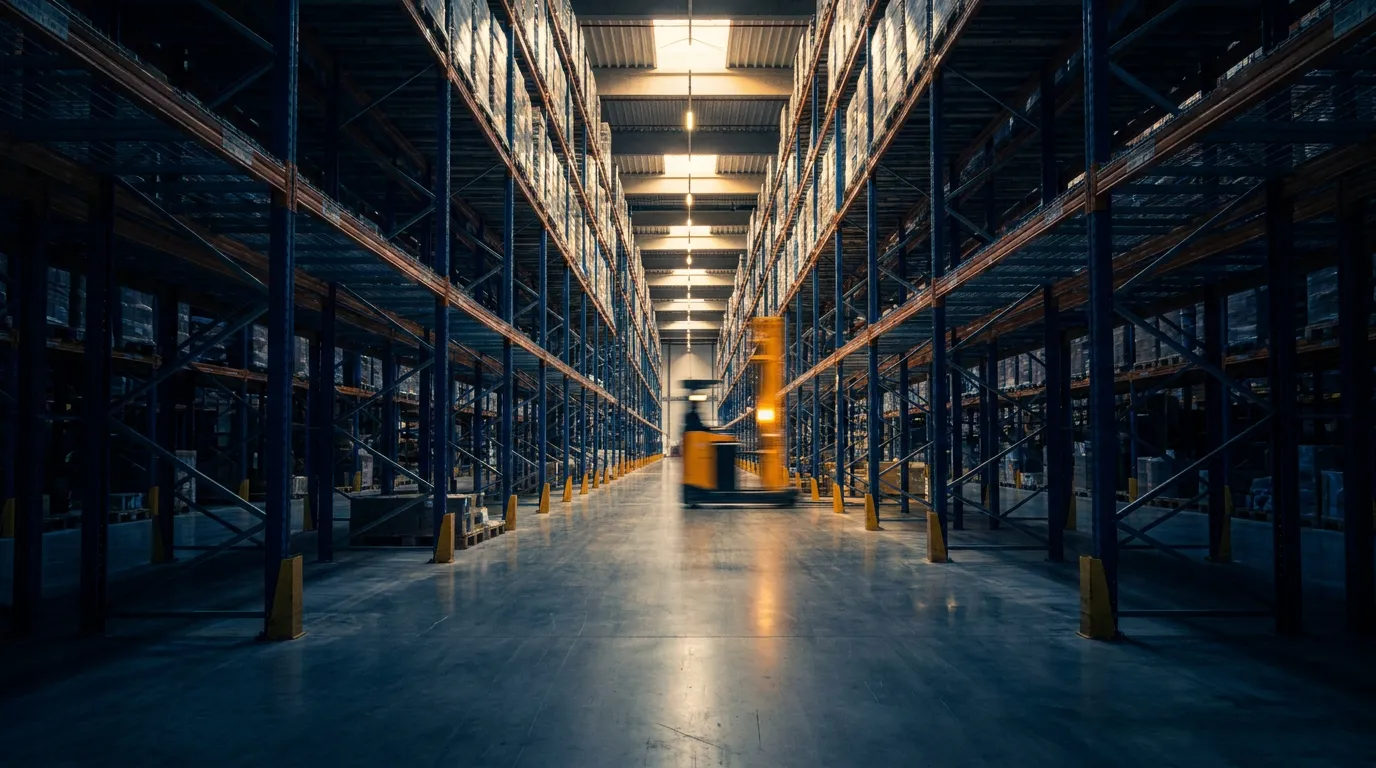
What we offer
Storage, inventory management, order preparation and distribution, managed on the same system as your transport operation.
Scope
- Short and long-term storage
- Pick and pack
- Stock counting and reporting
- Cross-dock and transfer
- E-commerce order fulfilment
- Reverse logistics and returns
When to move to 3PL
Running your own warehouse makes sense when volume is steady and predictable. When it swings, the fixed cost — rent, staff, equipment — is paid in the quiet months too. 3PL turns that into paying for what you use.
The question usually comes up with seasonal swings, entry into a new market, the launch of an e-commerce channel, or when warehouse operations start taking more attention than the core business.
How the cost is built
3PL pricing usually has three components:
- Storage — per pallet or location, per period
- Handling — per inbound, outbound, pick and pack
- Value-added work — labelling, kitting, quality control
Share your order profile up front — number of lines, units per line, order frequency — and the quote will hold. Quotes built on averages change once the operation starts.
Stock visibility
Stock is reported so you can see it too, not just us: inbound and outbound movements, current level, and a breakdown by batch and expiry date. The stock-count cycle is defined in the contract.
Returns
In e-commerce especially, an undefined returns flow blocks the warehouse. Which checks a returned item goes through, when it re-enters sellable stock and when it is set aside are written as rules.