



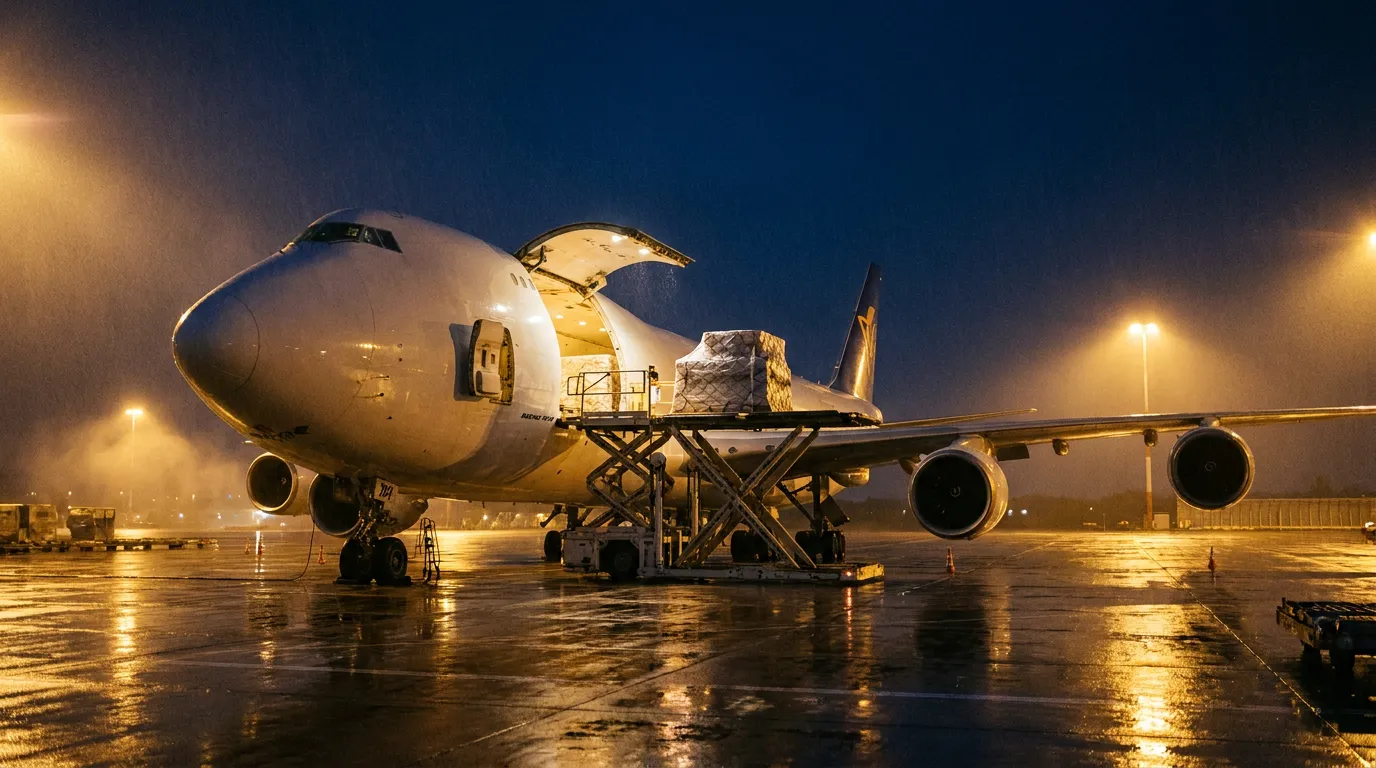
What we offer
Express, priority and cost-focused deferred options for time-sensitive cargo. One team manages the whole process, from carrier selection to final delivery.
Scope
- Consolidated and direct air cargo
- Charter and part-charter arrangements
- Dangerous goods (DGR) and temperature-controlled shipments
- Airport-to-door and door-to-door
- Integrated with customs clearance
When air freight is the right call
Air freight is not simply “the expensive option”. The decision is made on total cost, not freight alone: the capital tied up by cargo sitting 30 days at sea, the stock it creates and the sales missed often exceed the difference in freight.
Air is typically right when:
- The product has a short shelf life or a short season
- A production line or a point of sale is about to stop
- Value is high relative to volume, so capital cost beats freight cost
- The ocean sailing has been missed and the delivery date is fixed
What sets the rate
Air freight is priced on chargeable weight, not actual weight: whichever is greater between volumetric weight (usually 1 m³ = 167 kg) and actual weight. Light but bulky consignments therefore cost more than expected.
Other factors: routing and number of transhipments, peak season, fuel and security surcharges, dangerous goods or temperature requirements, and whether the packing dimensions palletise cleanly.
Practical notes
Share the packing dimensions before shipping — a few centimetres over can mean the cargo will not fit the lower deck, and the cost doubles.
Consignments containing lithium cells, aerosols, paint or magnetised material are dangerous goods; an incomplete declaration means the carrier will not accept them. If in doubt, ask before shipping.