



Industry
Automotive and Industrial Equipment
The production line does not stop.
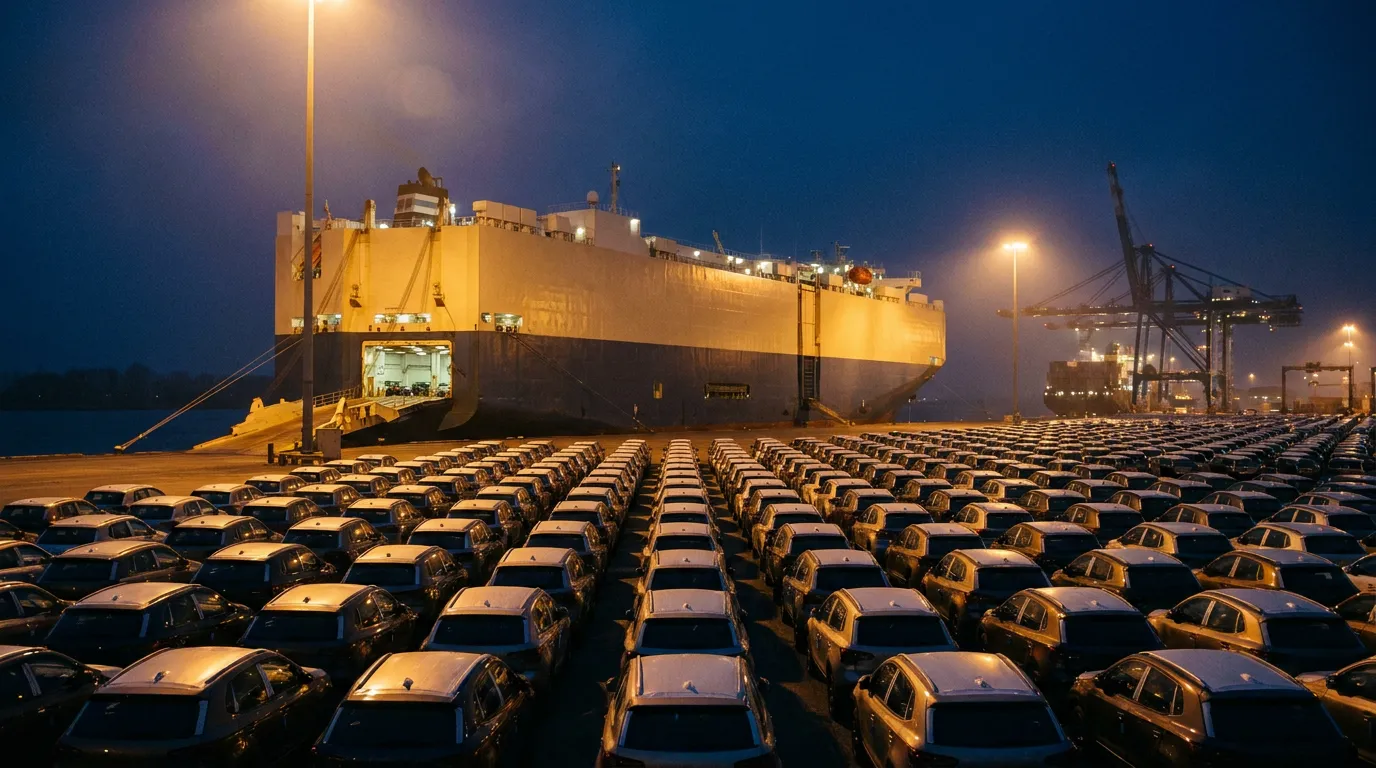
Logistics in automotive and industrial equipment
Success here is measured by a line that keeps running, not by tonnage moved. An hour of stopped production costs far more than air freight on the missing part. Decisions are made knowing that ratio.
What makes it hard
- Line stoppage is expensive. A single missing component can halt the whole plant.
- Lean stock magnifies risk. Running low on inventory cuts cost but transmits every supply chain hiccup straight to the line.
- Spare part demand is sudden. A field breakdown cannot be planned; it is expected to be met the moment it appears.
- Heavy machinery needs specialised equipment. Machine tools and presses do not move on standard trailers, and positioning is a separate job.
How we set it up
We keep a separate, pre-defined express lane for spare parts. When an urgent request comes in, the process is not built from scratch — a standing flow takes over.
For series production material the shipment programme is tied to the production calendar. The weekly plan is written backwards from the date the line needs the material.
For heavy machinery the loading, lashing and unloading plan is prepared in advance, and the access route and floor loading at the plant are checked before departure.
Practical notes
Listing and prioritising which parts count as “line-stoppers” avoids argument during a crisis. On machinery moves, the list of parts to be dismantled and responsibility for reassembly are settled up front.
Related content
Services
- International Road FreightFull and part load road transport across Europe, the Middle East, the Caucasus and Central Asia — vehicles, customs and transit under one desk.
- Ocean FreightFCL, LCL and specialised cargo, with carrier and routing chosen for cost and reliability.
- Supply Chain OptimisationAnalysis of the current flow, bottleneck detection and a measurable improvement plan.