



What we offer
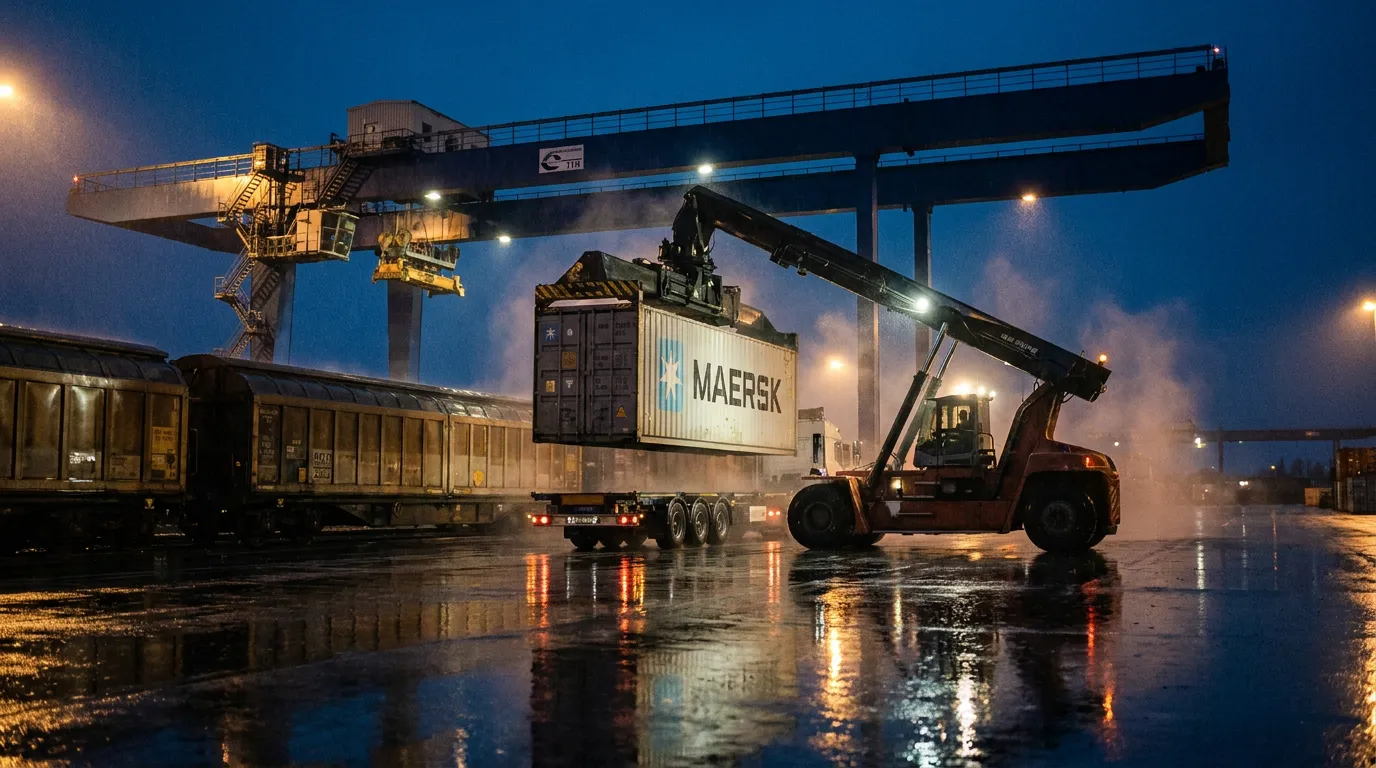
Operations that keep the cargo in one loading unit while combining several transport modes — container, swap body or semi-trailer. Only the unit changes hands; the goods are never rehandled.
That distinction matters. In a broken shipment the cargo is reloaded at every mode change. In an intermodal move the unit stays sealed, so handling damage risk arises not once but never.
Scope
- Sea plus road (port to door)
- Rail plus road (terminal to door)
- Ro-Ro plus road on European routes
- Sea plus rail (port to inland terminal)
- Unit supply: containers, swap bodies, semi-trailers
- Transhipment planning and terminal coordination
- End-to-end tracking and a single invoice
What it delivers
Cost. Shifting the long leg to rail or sea lowers the freight bill; road remains only at first and last mile.
Carbon. Emissions per tonne-kilometre are markedly lower on rail and sea. For customers who report carbon, this is a measurable gain.
Driver hours. Removing the long road leg takes the driver hours constraint out of the plan.
How we build it
First we measure the cargo’s time tolerance. Intermodal is generally slower door to door; the saving only exists if the delivery schedule allows it.
Then we choose the unit type. Containers work with sea legs but lose pallet efficiency in European distribution. Swap bodies and semi-trailers suit road distribution but cannot cross an ocean leg.
Finally we fix the transhipment points. Each one is a schedule dependency, and the weakest link sets the total time.
What to watch
Confirm equipment compatibility up front. Not every terminal can handle every unit type.
Do not run tight transfer windows. A day of buffer between sea and rail is cheaper than a week lost to a missed connection.