



Industry
Retail
A supply flow that keeps shelves full.
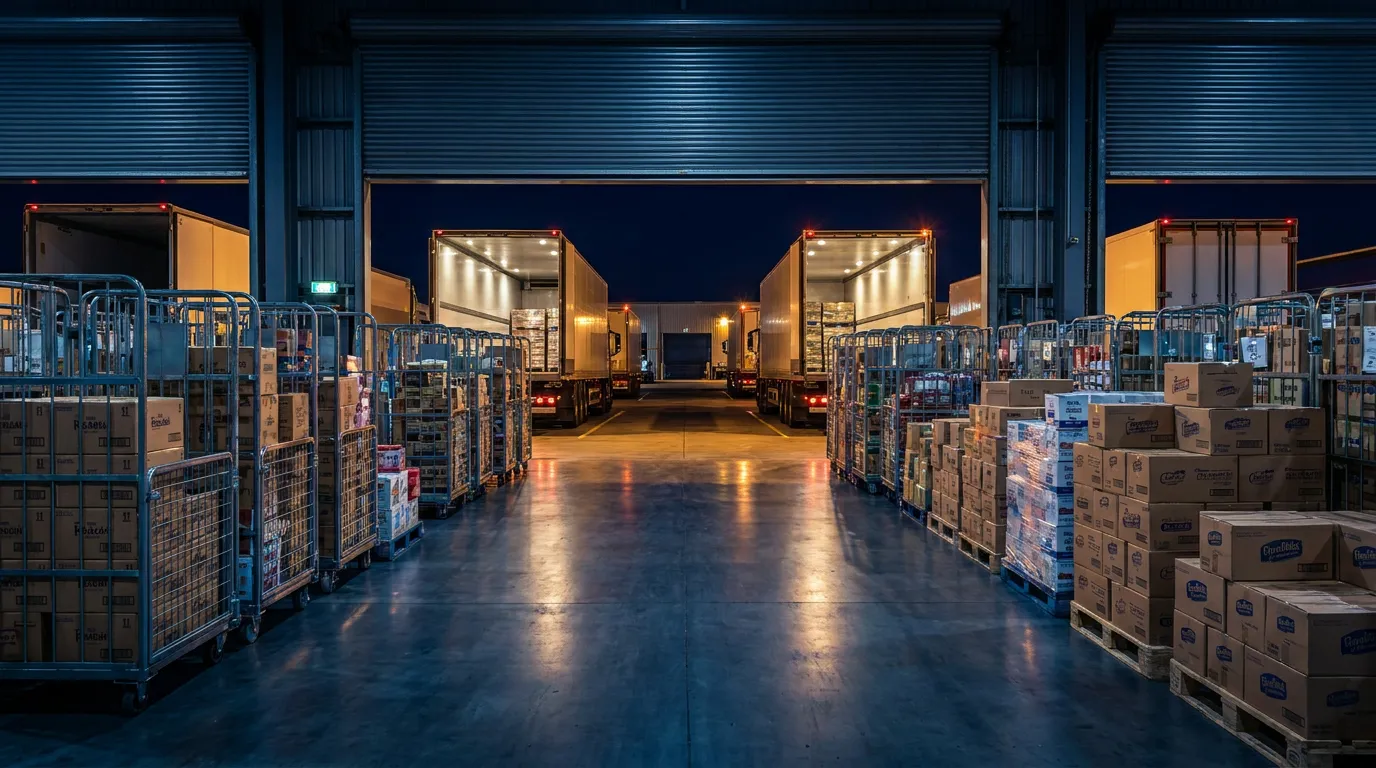
Logistics in retail
In retail, logistics is measured on the shelf, not in the warehouse. If stock sits at the central depot while the store is out, the operation has not worked. So we build the plan backwards from store demand.
What makes it hard
- Demand is not flat. Promotions, season changes and holidays multiply volume; the same capacity will not carry it.
- The breakdown is many-headed. One shipment splits across dozens of stores, and wherever the sorting happens is where cost and time get decided.
- Two channels feed off one stock. Stores and e-commerce want the same item; without a priority rule set in advance, both suffer.
- Returns get ignored. In e-commerce especially, an unplanned return rate fills warehouse capacity unexpectedly.
How we set it up
For store-level distribution we sort as early in the chain as possible, so the goods are ready to dispatch when the container opens.
For promotional periods we reserve capacity in advance. In the weeks when the freight market tightens, what helps is not finding space but space already committed.
E-commerce fulfilment runs off the same stock visibility as store replenishment, and which channel takes priority is defined as a rule rather than decided daily.
Practical notes
Barcoding and price labelling done at origin cuts work for store staff. If goods arrive in display packaging, the loading plan is built separately so it is not crushed in transit.
Related content
Services
- E-Commerce Logistics and FulfilmentStorage, picking, packing and carrier integration; micro-export, cross-border shipments and returns handled in one operation.
- Warehousing and 3PLScalable storage, pick and pack, and distribution — fully integrated with transport.
- Groupage and Part LoadsPart load services by road, sea and air: scheduled groupage, transparent ldm-based pricing and controlled handling.