



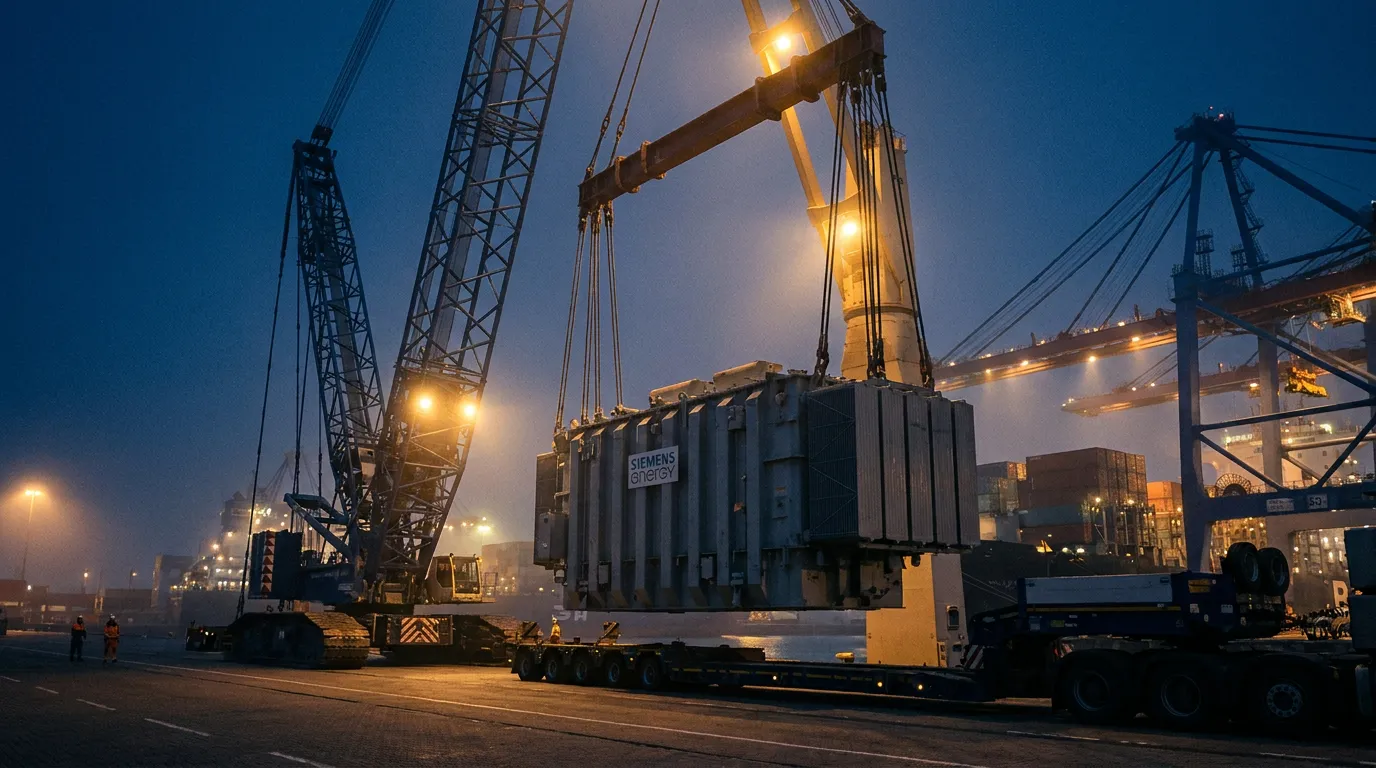
What we offer
Engineering-supported transport planning for cargo that does not fit conventional equipment.
Scope
- Out-of-gauge (OOG) and heavy lift
- Route surveys and permits
- Load and lashing engineering
- Crane and special equipment coordination
- Site survey and delivery planning
Why it is a separate discipline
In project cargo, moving the load is the small part. The real work is establishing in advance whether the road it will travel is physically suitable: turning radius, bridge capacity, overpass clearance, power line height, ground bearing.
That assessment happens at the desk, not at the roadside. Skip it and the cargo stops halfway, with the cost multiplying.
How the process runs
- Cargo survey — dimensions, weight, centre of gravity, lashing points
- Route survey — critical points identified, site visit where needed
- Permits — highways, municipality, electricity distribution
- Equipment plan — lowbed, modular trailer, crane capacity
- Lashing calculation — securing method and calculation report
- Move and escort — traffic coordination, escort where required
- Site delivery — offloading in erection sequence
The schedule
On project cargo the critical path is usually not the transport but the permits. On an out-of-gauge move approvals can take weeks, and that time belongs in the shipment calendar from the start. A delivery date quoted without it will not hold.
Insurance
Carrier liability limits sit far below the real value of project equipment. The policy should be written on replacement value, and whether separate cover is needed for damage during erection is assessed as well.