



What we offer
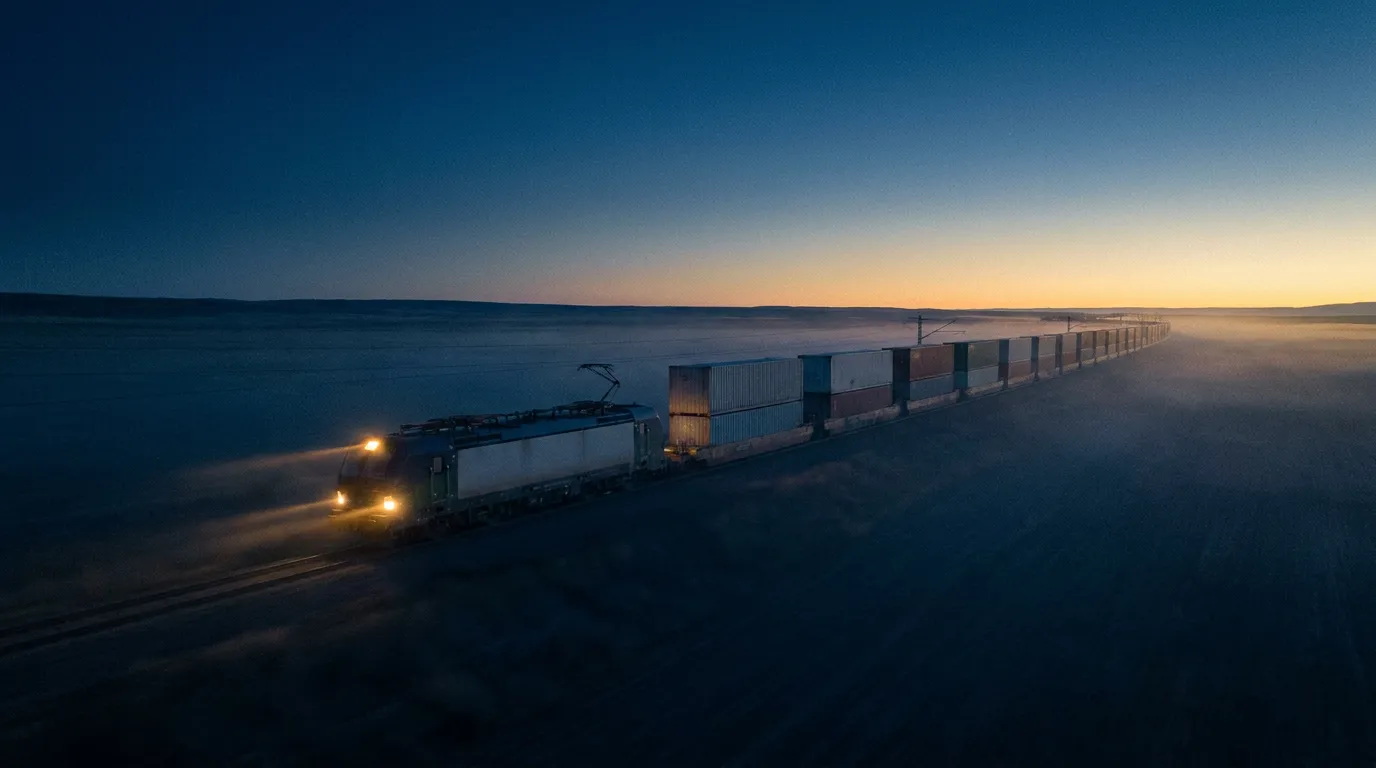
Rail transport by container and by wagon: block train organisation, management of transhipment points and the road legs at both ends.
Rail fills the gap between sea and road — clearly faster than sea, clearly cheaper than road, with lower emissions per tonne than either.
Scope
- Block train and single wagon organisation
- 20’ and 40’ containers, swap bodies and semi-trailers
- Middle Corridor services to Central Asia and China
- Baku–Tbilisi–Kars line to the Caucasus
- European rail routes
- CIM and SMGS consignment notes
- Terminal handling and final-mile road connection
Routes
The Middle Corridor runs from China through Kazakhstan and across the Caspian to Azerbaijan, Georgia and Türkiye. It is short compared with the sea route and far cheaper than air, which makes it attractive for mid-value industrial goods. The Caspian crossing involves a ferry transfer, and schedule discipline depends on it.
The Baku–Tbilisi–Kars line connects Türkiye to that corridor.
European routes provide alternative capacity when road quotas tighten.
Gauge and transhipment
This is the technical detail most often overlooked. Where 1435 mm and 1520 mm networks meet, either bogies are changed or containers are transferred. Every such point adds time and cost, and must be counted separately when estimating transit.
This is precisely where container transport beats wagon-based transport: the transfer is far quicker.
When rail makes sense
Rail is strongest when three conditions hold together: the cargo is bulky or heavy, the delivery date is flexible in weeks rather than days, and there is a regular service on the route.
For small consignments and urgent shipments it is usually the wrong choice — a block train does not depart until it is full.
What to watch
Ask about frequency first. On a weekly service, missing loading by one day costs seven.
Compare door to door. Rail rates are terminal to terminal; the road legs and handling at both ends are separate lines.