



Industry
Energy and Renewables
From turbine blade to transformer.
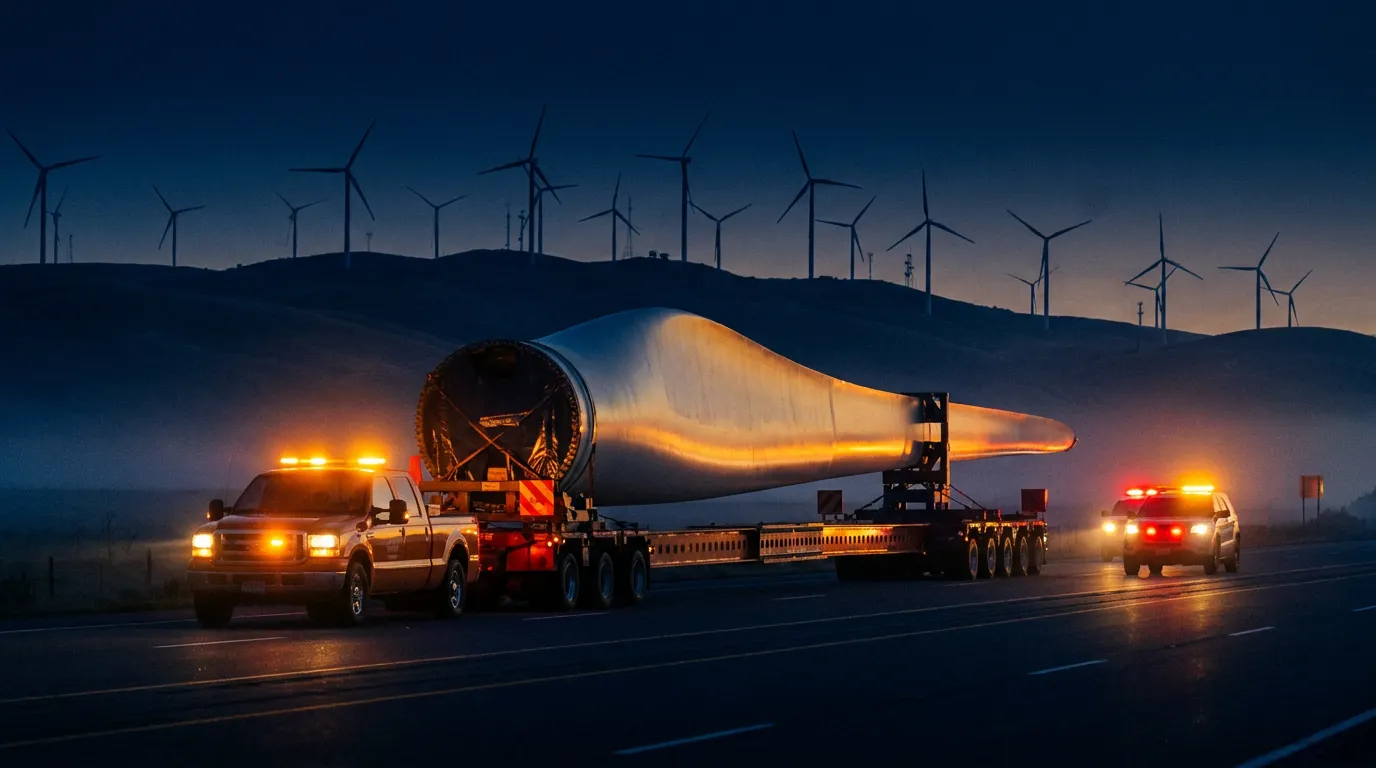
Logistics in energy and renewables
In this sector the road has to be as suitable as the cargo. Every bend, bridge and power line between the port and the site is assessed individually for a turbine blade. Planning here is an engineering job, not a haulage job.
What makes it hard
- Out-of-gauge dimensions. Length, width and height fall outside standard transport limits; each piece needs specialised equipment.
- The route is physically constrained. Turning radius, bridge tonnage, overpass clearance and power line height decide the route.
- Permits come from several authorities. Highways, municipality and the electricity distribution company all run on different calendars.
- The site may not be ready. A component arriving before the crane, the ground and the erection team creates risk and cost while it waits.
How we set it up
For out-of-gauge moves we run the route survey before the shipment: critical points are identified and temporary works planned where needed. Obstacles are found at the desk, not at the roadside.
Permit and route management sits with one owner, so approvals from different authorities are aligned with the shipment calendar.
Site delivery is planned around erection sequence. Components arrive in the order they will be installed, not to be stored.
Practical notes
A delayed component usually costs more through idle cranes and crews than through its own freight. That is why a fallback — an alternative route or mode — is defined up front for critical pieces.
Related content
Services
- Project CargoEngineering-led handling for oversized and complex shipments, from permits to load plans.
- Ocean FreightFCL, LCL and specialised cargo, with carrier and routing chosen for cost and reliability.
- Dangerous Goods TransportMovements under ADR, IMDG and IATA DGR by road, sea and air — classification, packaging, labelling and declaration handled end to end.