



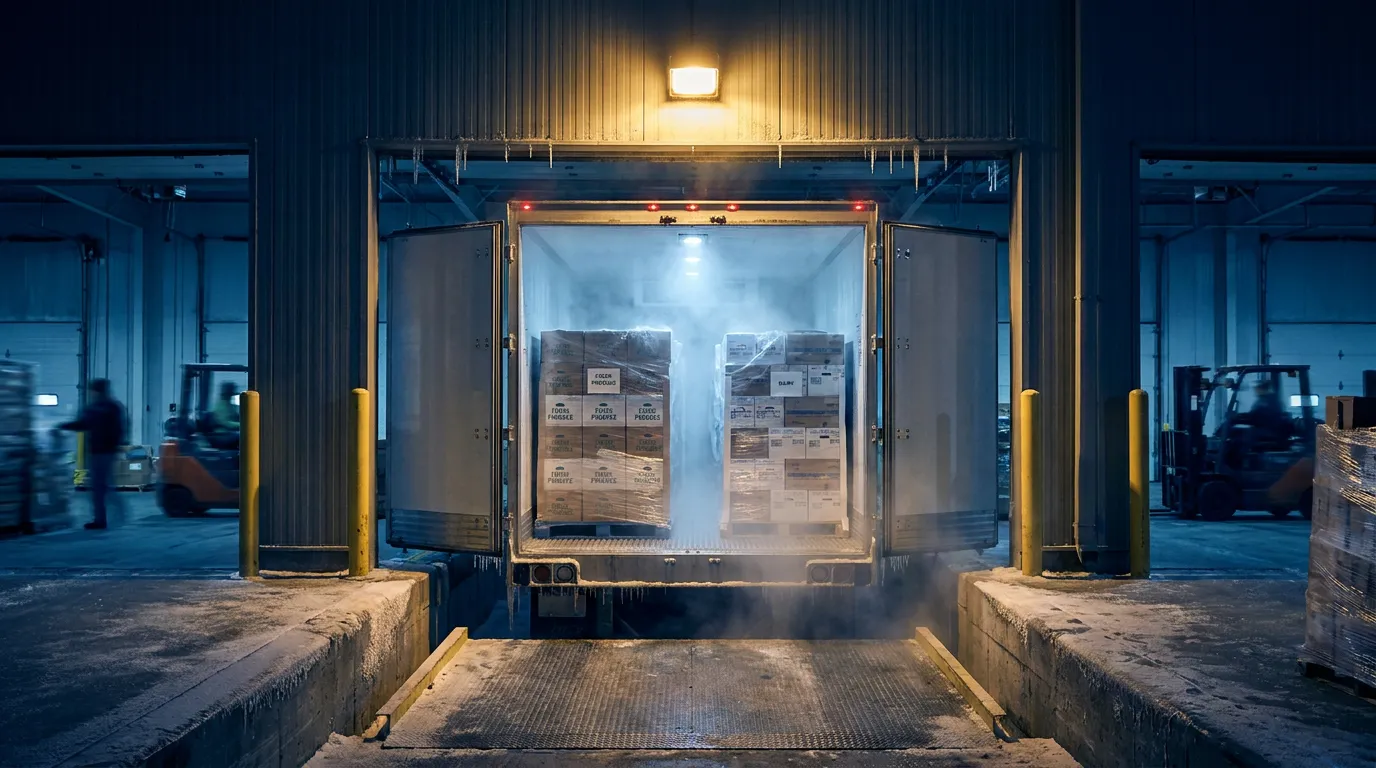
What we offer
Transport of frozen, chilled and temperature-controlled cargo by reefer road vehicle, reefer container and temperature-controlled air freight — each with a recorded temperature history.
In cold chain what spoils the product is usually not the transport itself but a single break in the chain. Half an hour on a loading dock, a night at customs, an open door at transhipment — without a record these only surface on arrival, and at that point the argument about liability begins.
Scope
- Reefer road transport, full and part load
- Reefer container ocean freight
- Temperature-controlled air freight
- Pre-cooled equipment supply
- Continuous data logger recording
- Cold storage and cross-dock
- Priority handling of customs formalities
Temperature bands
Four bands are used in practice: frozen (generally −18 °C and below), chilled (0 to +4 °C), cool (+2 to +8 °C, common for pharmaceuticals and vaccines) and controlled room temperature (+15 to +25 °C).
The band follows the product’s own requirement and is confirmed in writing before loading. A verbal understanding protects no one when damage occurs.
Pre-cooling
The step most often skipped, and the most expensive to skip. A reefer unit is designed to hold temperature, not to bring it down. We make pre-cooling part of the loading instruction and record that the body reached target before loading began.
Recording and traceability
A data logger travels with every shipment and a report is handed over on arrival. Reefer containers add the unit’s own log.
This serves two purposes: it evidences the customer’s quality system, and when a deviation occurs it shows where it happened.
What to watch
Door-open time is critical. In part load cold chain the door opens at every stop. A multi-drop round is far riskier than a single delivery; sensitive products belong in a full load.
Ventilation settings depend on the product. Fresh produce respires; cargo carried with ventilation closed can spoil even at the correct temperature. Reefer settings are confirmed in writing before loading.
Customs time is part of the chain. Waiting in cold chain is not the same as waiting with dry cargo, which is why we plan document preparation around loading rather than arrival.